There are some places in India that have been included in the UNESCO World Heritage List, if you do not know about them, then we have made available in this post, if you are a student, then you must remember them for the preparation of the upcoming exam because many times questions related to the world heritage are asked, so you must read a tip.
Indian heritage included in the World Heritage List
– India now has a total of 40 World Heritage properties, which include 32 cultural, 7 natural and one mixed property.
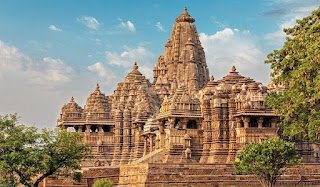
1. Group of monuments of Khajuraho
– Khajuraho,is located in ancient Kharjjuravahak
Madhya Pradesh State.
– The temples of Khajuraho are world famous for their architectural art.
– The Khajuraho group of Monuments is a group of several temples. Which was built by the Chandela rulers between 900 AD and 1130 AD.
– Chandela rulers built here many ponds, huge temples decorated with grandeur of craftsmanship and architectural beauty.
– The group of monuments of Khajuraho was declared a World Heritage Site by UNESCO in the year 1986.
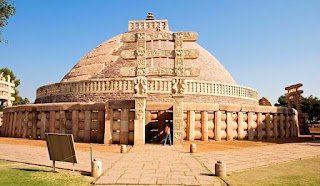
2. Sanchi Buddhist Stupa
– The Sanchi Stupa is located at Sanchi in Raisen district in Madhya Pradesh.
– Sanchi, which was known in ancient times as Kakanaya, Kakanava, Kakanadabota and Bota Sri Parvat.
– It is historical and one of archaeological importance religious place.
– The Sanchi Stupa is notable for its gateways, which contain decorative depictions of events from the life of the Buddha and accounts of his past lives.
– Sanchi Stupa was built by the great emperor Ashoka.
– UNESCO declared Sanchi Stupa a World Heritage Site in the year 1989.
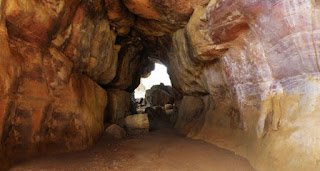
3. Bhimbetka stone shelter
– Bhimbetka caves are in Raisen district of Madhya Pradesh.
– These rock shelters are in the foothills of the Vindhya Range at the southern end of the Central Indian Plateau.
– Dr. V.S. Wakankar (one of the renowned archaeologists), discovered these caves in 1958.
– The word ‘Bhimbetka’ is derived from ‘Bhim Batika’.
– These caves are named after ‘Bhima’, one of the five Pandavas.
– Bhimbetka means the sitting place of Bhima.
– UNESCO declared it a World Heritage Site in the year 2003.
4. Agra Fort
– It is located in Agra city of Uttar Pradesh state.
– It was the main residence of the emperors of the Mughal dynasty until 1638, when the capital was moved from Agra to Delhi.
– UNESCO declared it a World Heritage Site in the year 1983.
5. Taj Mahal
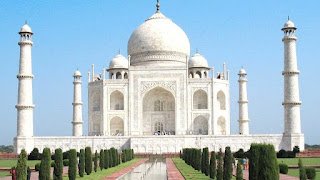
– The Taj Mahal is located on the banks of the Yamuna River in the city of Agra in Uttar Pradesh, India.
– Mughal Emperor Shah Jahan built it between 1632-1653 in memory of his wife Mumtaz Mahal.
– UNESCO included it in the list of World Heritage Sites in the year 1983.
6. Fatehpur Sikri
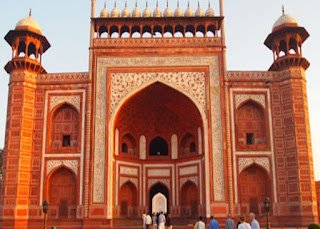
– In the 16th century, Mughal emperor Akbar built his capital at Fatehpur Sikri near Agra in Uttar Pradesh.
– UNESCO declared Fatehpur Sikri as a World Heritage Site in the year 1986.
7. Keoladeo National Park
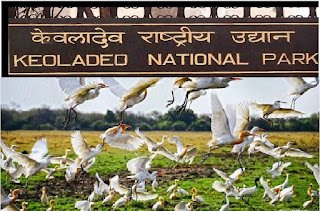
– Keoladeo Ghana National Park is located in Bharatpur, Rajasthan. It is also known as Bharatpur Bird Sanctuary.
– This national park was added to the UNESCO World Heritage Site list in the year 1985.
8. Hill Forts of Rajasthan
For you know which places of Rajasthan are included in the World Heritage List
– The hill forts of Rajasthan consist of six forts – Chittorgarh, Kumbhalgarh, Ranthambore, Amer, Jaisalmer and Gagron. UNESCO declared them a World Heritage Site in the year 2013.
1. Chittorgarh Fort -:
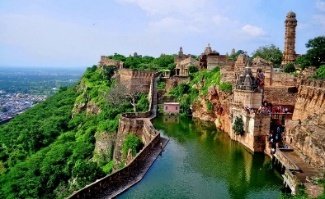
– Chittorgarh fort was built by Chintragand Maurya (Maurya King) according to the famous book ‘Veer Vinod’.
– Fort of Chittorgarh is situated at the confluence of Gambhiri and Bedach rivers.
– This fort is the largest fort in terms of area among the forts of Rajasthan. (Area 28 sq.km.)
– The shape of this fort is like that of a whale.
– This fort is called the first largest living fort of Rajasthan.
– This fort is the pride of Rajasthan, Sirmaur of the forts, Chitrakoot and Durgadhiraj.
2. Kumbhalgarh Fort –
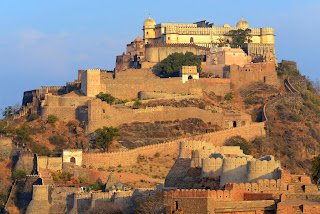
– This fort was built by Maharana Kumbha under the supervision of Shilpi Mandan on the ruins of an ancient fort built by the Maurya ruler Samprati.
– Other names of this fort – Third Eye of Mewar, Crisis Capital of Mewar, Kamalveer etc.
– Kumbhalgarh fort wall is protected by 36 km long parkota.
3. Ranthambore Fort -:
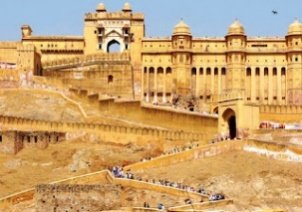
– This fort is a mountain and forest fort surrounded by the Aravali mountain ranges in Sawai Madhopur district.
– This fort was built by the Chauhan rulers in the 8th century.
– The first Saka of Rajasthan took place in this fort in 1301 AD during the time of Hammir Dev Chauhan.
4. Amer Fort -:
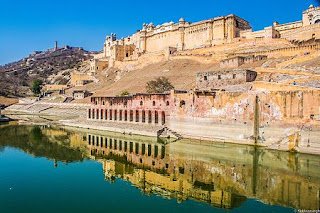
– This fort is a Giri fort Situated 11 km far away towards north from Jaipur city.
– Kokildev had snatched it from the Meena ruler Bhutto of Amer in 1036 AD.
– This fort was rebuilt by King Mansingh-I.
5. Jaisalmer Fort -:
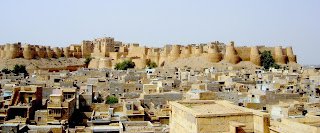
– This fort was built by Bhati dynasty ruler Rao Jaisal on Trikut hill in 1155 AD.
– Other names of this fort – Songadh, Gauharargarh, Trikutgarh and Uttar Bhad Kiwad etc.
– This fort is the second largest living fort of Rajasthan.
6. Gagron Fort -:
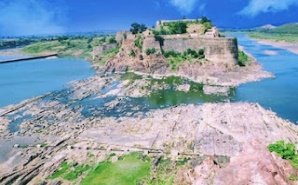
– This fort was built by the Parmar rulers in the 11th century.
– This fort is situated in Samaelani Jhalawar.
– Other names of this fort are – Dhulargarh, Dodgarh, Gargratpur etc.
– In this fort, the Dargah of Sufi saint Meethe Saheb who came to Gagron from Khorasan and Buland Darwaza built by Aurangzeb are also situated.
– Saint Pipa’s chhatri is also situated in this fort.
9. Jantar-Mantar :-
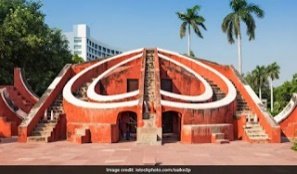
– Jantar Mantar located in Jaipur, Rajasthan was built by Raja Sawai Jai Singh-II.
– Jantar Mantar was built in the early 18th century to observe astronomical conditions. A set of 20 main instruments were installed in this site to make accurate observations.
– It reflects the astronomical skills revived by Indians during the Mughal period and Shows the expression of knowledge.
– UNESCO declared it a World Heritage Site in the year 2010.
10. Jaipur -:
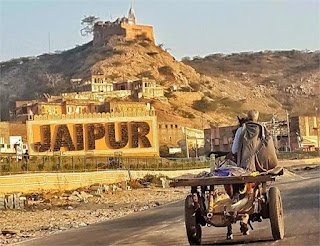
– Jaipur city was founded in the year 1727 by Sawai Jai Singh II.
– There are business facilities on the city roads since the colonial period. These roads meet each other at large intersections called Chaupars.
– Elements of ancient Hindu, Mughal and Western countries have been used in the planning of the city.
– Pink City Jaipur has been included in the UNESCO list of World Heritage Sites in July 2019.
11. Ajanta Caves -:
– The Ajanta Caves are a series of rock-cut caves in the Sahyadri mountain range (Western Ghats) near the Waghora River near Aurangabad in Maharashtra.
– It has a total of 29 caves (all Buddhist), of which 25 were used as viharas or residential caves while 4 were used as chaityas or prayer halls.
– Information about the Ajanta Caves is found in the travelogues of Chinese Buddhist travelers Fa Hien (380 – 415 AD during the reign of Chandragupta II) and Hiuen Tsang (606 – 647 AD during the reign of Emperor Harshavardhana).
– UNESCO included it in the list of World Heritage Sites in the year 1983.
12. Ellora Caves :-
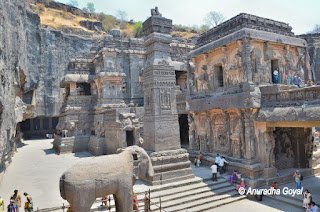
– These caves are located in the Sahyadri mountain range of Maharashtra, about 100 kilometers away from the Ajanta caves.
– There is a group of 34 caves here, of which 17 belong to Brahmin, 12 to Buddhist and 5 to Jainism.
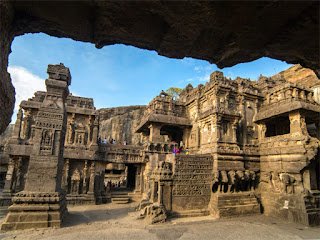
– The most notable of the cave temples of Ellora is Kailasa (Kailashnath; Cave No. 16), named after Mount Kailash in the Himalayas (the abode of Lord Shiva according to Hindu beliefs).
– It was declared a World Heritage Site by UNESCO in the year 1983.
13. Elephanta Caves -:
– Elephanta Caves are located in Elephanta Island in Maharashtra.
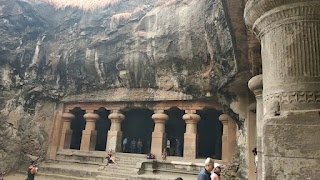
– These caves were built during the 5th and 8th centuries. The main cave is dedicated to Lord Shiva.
– Elephanta Caves are a combination of 7 caves, the most important of which is Mahesh Murthy Cave.
– The chambers of sculpture in this cave show remarkable images of Ardhanarishvara, Kalyana Sundara Shiva, Ravana carrying Mount Kailash, Andhakari Murti and Nataraja Shiva.
– UNESCO declared it a World Heritage Site in the year 1987.
14. Chhatrapati Shivaji Maharaj Terminus (Victoria Terminus)-
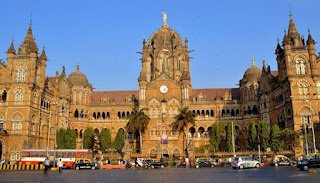
– Chhatrapati Shivaji Maharaj Terminus is a historic railway station located in Mumbai, Maharashtra.
– This railway station was built in 1887 AD with Victorian Italian Gothic Revival architecture.
– UNESCO declared this station a World Heritage Site in the year 2004.
15. Victorian Gothic and Art Deco -:
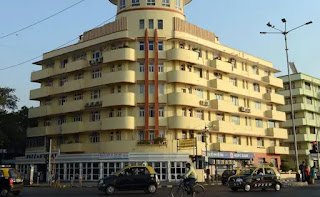
– ‘Victorian Gothic’ and ‘Art Deco’ of the city of Mumbai in Maharashtra is a collection of 11th-century Victorian Neo-Gothic public buildings and 20th-century Art Deco buildings.
– UNESCO has declared it a World Heritage Site in the year 2018.
16. Humayun’s Tomb -:
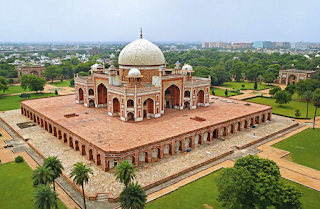
– Humayun’s Tomb located in Delhi is a great example of great Mughal architecture.
– This tomb was built in 1570 AD. This mausoleum is of special cultural importance because it was the first garden mausoleum in the Indian subcontinent.
– It was built under the patronage of the great emperor Akbar, son of Humayun.
– It is also called the ‘dormitory of the Mughals’ because more than 150 members of the Mughal family are buried in its chambers.
– UNESCO declared it a World Heritage Site in the year 1993.
17. Qutub Minar -:

– Immediately after the defeat of the last Hindu ruler of Delhi, it was built in the form of a 73 meter high Vijay Minar by Qutubuddin Aibak in 1193 AD.
– This building has five floors. Each floor has a balcony
– The first three floors are made of red sandstone and the fourth and fifth floors are made of marble and sandstone.
– UNESCO declared Qutub Minar as a World Heritage Site in the year 1993.
18. Red Fort -:
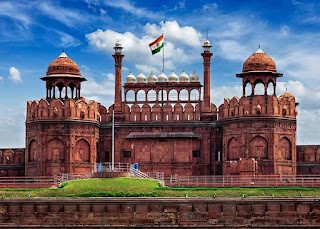
– Red Fort is located in the capital of India, Delhi and was built by the Mughal ruler Shah Jahan.
– UNESCO declared this fort as a World Heritage Site in the year 2007.
19. Champaner – Pavagadh Archaeological Park -:
– Pavagadh Archaeological Park is located in Panchmahal district of Gujarat state, India.
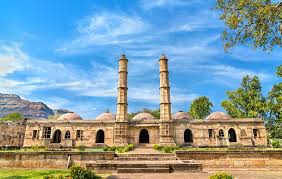
– This garden is near Champaner, the historical city built by Sultan Mahmud Begda of Gujarat.
– Pavagadh hill is made of red-yellow colored rocks which is one of the oldest rocks of India. This mountain is about 800 meters high above sea level.
– UNESCO declared Champaner-Pavagarh Archaeological Park of Gujarat as a World Heritage Site in the year 2004.
20. Rani Ki Vav (Queen’s Stepwell) -:
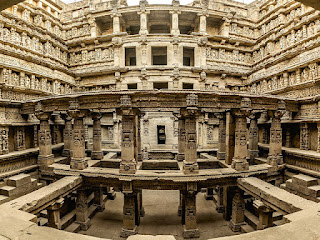
– Rani Ki Vav located in Patan district of Gujarat is a unique example of the ancient tradition of water conservation.
– This stepwell was built in 1063 AD in the memory of King Bhimdev I of Solanki ruler by his wife Queen Udayamati.
– Built on the banks of river Saraswati, this 7-tiered Vav is 64 meters long, 20 meters wide and 27 meters deep. There is also a 30 kilometer long mysterious tunnel in this Vav which originates in Sidhpur of Patan.
– UNESCO declared it a World Heritage Site in the year 2014.
21. Ahmedabad -:

– Ahmedabad city located in Gujarat is a culturally rich and architectural heritage city.
– It is the first city in India to be included in the World Heritage Site.
– This historical city was declared a World Heritage Site by UNESCO in the year 2017.
22. Mahabodhi Temple Complex -:
– The Mahabodhi Temple located in Bodhgaya, Bihar was built by Emperor Ashoka.
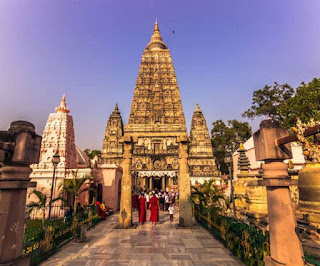
– The famous Bodhi Tree is located inside this temple complex where Mahatma Buddha attained enlightenment.
– UNESCO declared it a World Heritage Site in the year 2002.
23. Nalanda Mahavihara (Nalanda University):
– Nalanda is located in Bihar state of India.

– During the Gupta Empire, Nalanda flourished.
– Nalanda Mahavihara was one of the greatest centers of Buddhist learning between the 5th and 12th centuries.
– UNESCO declared it a World Heritage Site in the year 2016.
24. Group of monuments at Hampi -:
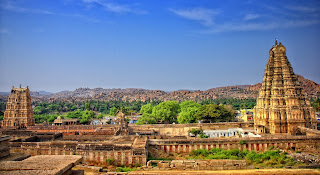
– Hampi, the capital of the Vijayanagara Empire, one of the greatest empires of medieval India during the fourteenth century, is located in the state of Karnataka.
– It was founded by Harihar and Bukka in 1336 AD.
– Hampi is surrounded by the Tungabhadra River on the north and by rocky granite mountains on the other three sides.
– The group of monuments at Hampi contains the remains of the capital of the last great Hindu empire, Vijayanagara.
– UNESCO declared it a World Heritage Site in the year 1986.
25. Group of monuments of Pattakkala -:
– It is situated near the Malaprabha River in Karnataka.
– The group of monuments at Pattakkala were built during the 7th and 8th centuries during the Chalukya dynasty.

– Located in the southern state of Karnataka, the Patta Dakkal group of monuments is famous for displaying a harmonious blend of architectural forms from northern and southern India.
– This famous World Heritage Site is a group of 10 large temples, each of which has interesting architectural features.
– UNESCO declared this place a World Heritage Site in the year 1987.
- Speedy Current Affairs November 2025 Pdf Free Download
- Africa Continent, Major Countries, Straits and Lakes
- Asia continent, Major countries, Jalasandhi and Lakes
- Vision Ias Today Current Affairs 10 May 2025
- Vision Ias Today Current Affairs 8 May 2025
UNESCO World Heritage List includes more than 40 places / palaces of India to read Part 2 of this post to study further
Note : If you are preparing for UPSC, SSC or any other exam then definitely join us.
2 thoughts on “World heritage in India Complete Information”