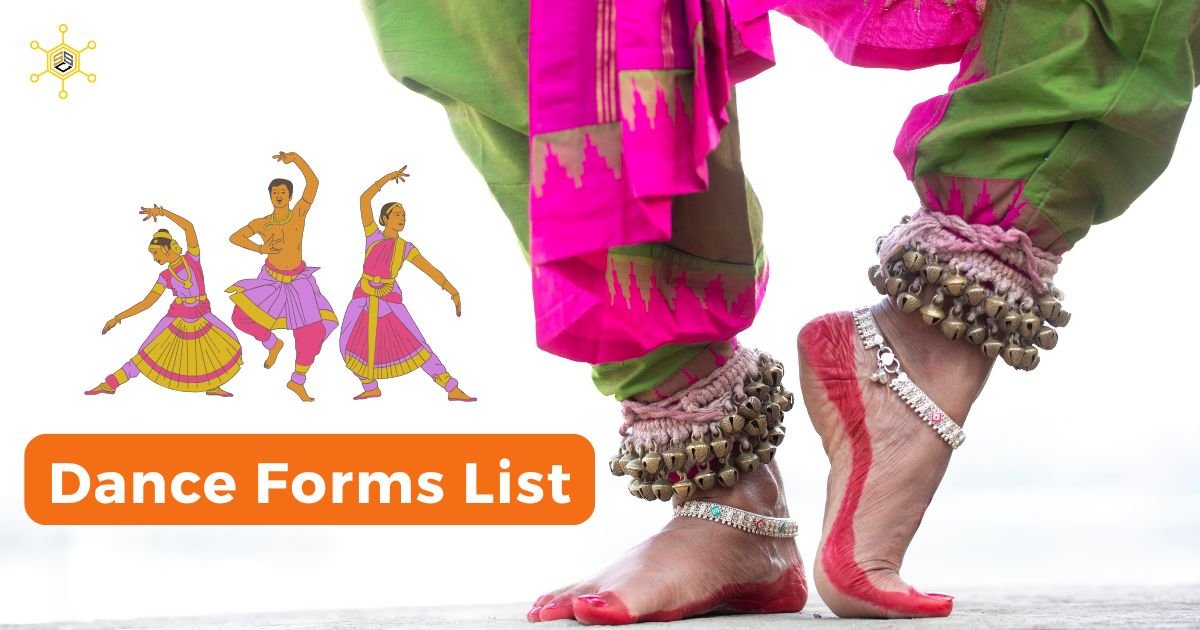
In this post today, we will read about the Dance Forms of india, if you do not want which dances are famous in India, then we are providing the names and information of them all in this year, you should know about it so that if any question is asked in the exam, you can answer it.
Dance is known by different names in different states of India, such as Ghoomar is famous in Rajasthan, in many states, the dance is famous in many states, about which we make information about our need.
Major dances of India
– Indian dance styles can generally be divided into two parts.
(1) classical dance (2) Folk dance
– Most of these dance styles have been related to religion and were often performed to express devotion towards a deity.
Classical dance – Bharat Muni’s “Natyashastra” is available as the oldest text on classical dance.
– “Natyashastra” is the oldest source of drama, music and dance.
There are 8 styles of Indian classical dance – Classical dances are based on two types of bhavas, Tandava (Shiva) and Lasya (Parvati).
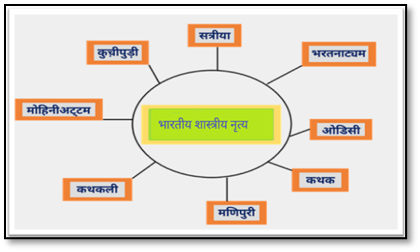
Bharatnatyam:- This dance style has developed in Tamil Nadu.
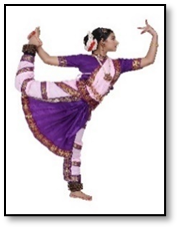
– Apart from Bharat Muni’s Natyashastra, “Abhinaya Darpan” written by Nandikeshwar is a major source for the technical study of Bharatanatyam.
– This dance, which was started by the Devadasis in the temples, got patronage in the 20th century due to the efforts of V. Balasaraswati, Rukmini Devi Arundale, E. Krishna Iyer
– [Rukmini Devi Arundale established the Kalakshetra Institute in Chennai to promote this art]
– Bharat Natyam is a solo female dance. Sadir is the ancient name of Bharatanatyam.
lead artist – T. Bala Saraswati, Rukmini Arundale, Sonal Mansingh, Vyjayanthimal, Hema Malini, Yamini Krishnamurthy, Swapra Sundari, Mrinalini Sarabhai, etc.
Kathakali:- Kathakali is the main traditional folk dance of Kerala.
– Kathakali is a blend of dance, music, and acting.
– It is a pantomime dance in which the dancer performs with his hands and facial expressions.
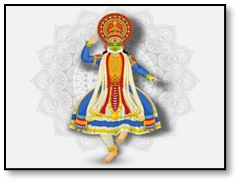
– The themes of these dances are based on the mythological epic, Ramayana, Mahabharata, which are presented by the dancers.
– In this dance the faces of the dancers are painted which gives the impression of a mask.
– In this dance mostly men play the role of women.
Ramanattam – Dance based on Ramayana
Krishnattam – Dance based on Mahabharata or Lord Krishna
famous artist – Anand Sivaraman, Krishnankutty, Mrinalini Sarabhai, Ballatol Narayan Menon, Udayshankar, Krishna Nair, Shantarao.
– In the year 1930, famous poets Vallathol Narayana Menon and Mukunda Raja founded Kerala Kalamandal for the preservation and revival of Kathakali.
Kathak:-
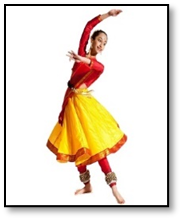
– The word Kathak originates from the word Katha which means telling a story.
– It is a major classical folk dance performed in North India.
– With the spread of the Bhakti movement in the 15th and 16th centuries, Kathak dance developed with distinctive genre.
– There are two major gharanas of Kathak dance – Jaipur Gharana, Lucknow Gharana.
– The reign of the last Nawab of Awadh, Wajid Ali Shah, was the golden age of Kathak.
– The influence of Muslim culture is visible in this classical dance.
lead artist – Birju Maharaj, Lachhu Maharaj, Sitara Devi, Shovana Narayan, Bindadin Maharaj, Achchan Maharaj, Manjushree Chatterjee, Kumudini Lakhia, Vidya Gauri Adkar.
Mohiniyattam:- Mohiniyattam is a traditional classical dance of Kerala.
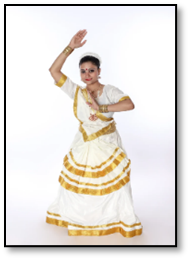
According to mythological stories, Lord Vishnu performed this dance in the guise of Mohini to kill Bhasmasur during the churning out of the ocean.
It is a solo dance performed by women which incorporates some elements of Kathakali and Bharatnatyam.
Bharatnatyam, Odissi and Mohiniyattam dances originated from Devadasi dance.
The main credit for reviving this dance is given to Vallatol Narayan Menon.
Lead Artist – Kalyani Kutthi Amma (The Mother of Mohini Attam) Krishna Panikkar, Sunanda Nair, Smita Rajan, Vijayalakshmi, Gopika Varma.
Sunanda Nair is the first woman to earn a master’s degree in Mohiniyattam.
Kanak Rele is known as the exponent of Mohiniyattam. She had established Nalanda Dance Research Centre.
Manipuri dance – Manipuri dance style is an ancient classical dance style. Which originated from the north-eastern state of Manipur.
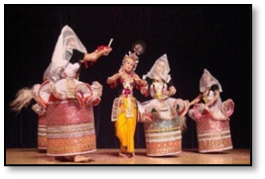
– Lai Haroba is the primal dance of Manipur which is the basis of all dances.
– The central theme of Manipuri dance is based on the love stories of Radha – Krishna although other themes are also displayed.
– Manipuri culture is a mixture of both Indian and South Eastern cultures, the influence of which is also visible in its dance.
Manipuri dance has two parts –
Jagoi – Famous for Rasleela, it represents Lasya Tattva.
Cholom – It represents the Tandava element of classical dance.
– Lai Haroba festival is celebrated mostly by the Meitai community in Manipur. It is also called the festival of the gods.
lead artist – Darshan Jhaveri, Guru Bipin Singh, Nirmala Mehta
Jhaveri Sisters – Nayana, Ranjana, Suvarna
Kuchipudi dance:- Kuchipudi is an Indian classical dance form named after Kuchipudi, a village in the Krishna district of Andhra Pradesh.
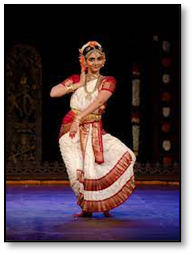
– The 17th century Vaishnava poet and visionary Siddhendra Yogi conceived the Kuchipudi style of Yakshagana.
– It is believed that Siddhendra Yogi saw in his dream that Lord Krishna was requesting him to compose a dance drama based on the mythological story of bringing Parijat for his queen Satyabhama. Hence Siddhendra Yogi composed Bhama Kalapam and encouraged the Brahmin boys of Kuchipudi village to present his composition.
lead artist – Indrani Rehman, Vempati Chinna Satyam, Raja and Radha Reddy, Yamini Reddy, Kaushalya Reddy, Bhavana Reddy
Odissi dance:- Odissi dance is one of the major classical dances of India which originated from the Hindu temples of Odisha, the eastern coastal state of India.
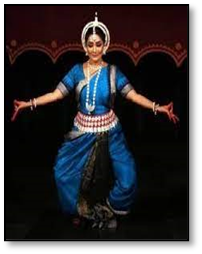
– This dance is considered to be one of the oldest classical dances and is mentioned in sites of archaeological importance in Hinduism, Jainism, Buddhism, etc.
– This dance is mentioned in the inscriptions of Brahmeshwar Temple and the inscriptions of Konark Temple.
– In the 2nd century BC there was the Maharis sect or Devadasi sect which performed dance in Shiva temples which later evolved into Odissi dance.
– [The Sun Temple of Konark was built by King Narasimha Dev I of the Ganga dynasty.]
– Odissi dance techniques are built around two basic postures – Chowk and Tribhanga.
Chauk → It is a square position with a manly posture with equal balance of body weight.
Tribhanga → This is a feminine posture, in which the body remains bent at the neck, torso and knees.
– The dance begins with Mangalacharan in which the dancer offers flowers to Mother Earth.
lead artist – Guru Kelucharan Mohapatra ® He is considered the originator of Odissi dance. He modernized and popularized the Odissi dance style.
– Sonal Mann Singh, Ileana Citaristi, Madhavi Mudgal, Kumkum Mohanty, Sanjukta Panigrahi, Indrani Rehman, Pankaj Charan Das, Sharon Lowen.
Satriya dance:- This is the main classical dance of Assam.
– It is a combination of music, dance and acting.
– The dance originated from the Krishna-centric Vaishnava monasteries of Assam and its development is attributed to Sankardeva, a 15th-century Bhakti movement scholar and saint.
– Satriya dance was given the status of classical dance by the Sangeet Natak Akademi in the year 2000.
– Shankardev developed it for the performance of Ankiya Naat. Bargeets are used in this.
Borgeet → It is a collection of musical compositions composed by Sant Shankardev.
lead artist – Guru Jatin Goswami, Ghanakant Bora, Sharodi Saikia etc.
Folk dances of Indian states
Andhra Pradesh – Kummi Dance, Ghanta Mardala, Butta Bommalu,
– Bhamkalpam, Dhimsa dance, Veeranatyam, Gobi, Dandariya, Bonalu, Mathuri dance.
kummi dance:-
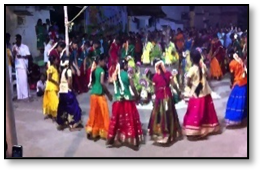
– This dance is also popular in Andhra Pradesh, Tamil Nadu and Kerala in India.
– There are no musical instruments in this folk dance; the participants dance by clapping to maintain the rhythm.
Gobi dance:- Gobi dance is one of the popular dance forms of the coastal regions of Andhra Pradesh.
Mathuri dance –
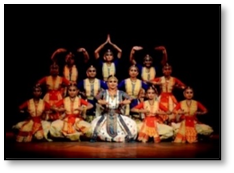
– It is the main dance of Andhra Pradesh and Telangana.
– It is performed by the Mathuri tribes, during the rainy season in the month of Shravan.
Dandaria dance – In Dandaria dance, a group of male dancers dressed in colorful costumes visit the nearby villages during the dance, where they are heartily welcomed.
Veeranatyam
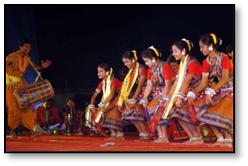
– Veeranatyam is one of the famous folk dances of Andhra Pradesh. This dance is a very popular folk dance based on stories taken from Vedas and Puranas related to Lord Shiva.
Butta Bommalu Dance –
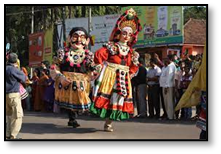
– In this dance the dancer wears various masks on the head and shoulders. This dance is also called mask dance.
Dheemasa dance – Dhimsa dance costumes are of typical tribal clothes. This dance is performed by 15-20 women. There are eight different categories in this dance.
Assam – Bicchua, Natpuja, Naganritya, Bihu, Bagurumba, Jhumura.
Bicchua dance – Bicchua is a tribal area. In this dance, vairety programs are presented mainly by children.
Bagurumba dance – Bagurumba dance is a folk dance of Assam, performed by the Bodo tribe.
Bihu dance –
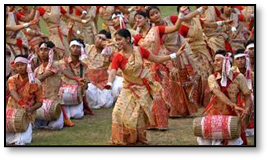
– Bihu is a group dance, in which men and women dance together. This dance is mainly presented in the annual Bihu Jalsa celebrated in the month of April.
jhumura dance:- Jhumura dance is performed by the tribal or tea tribe community of Assam.
Arunachal Pradesh
Mukhauta, Buiya, Pog Dance Wancho, Lion and Peak, Bardo Chham, Rikhampada.
buiya dance:-
Buiya folk dance belongs to Digaru Mishmi tribe.
Rikhampada dance:-
Rikhampada dance is the main dance of Nishi tribe.
It is a women’s dance.
Bihar
Jut – Jatin, Pavanriya, Bidesiya, Kajri, Chhau, Karma, Dhobia, Jogiya, Jhijiya, Jharni, Paika Jumri.
Bidesiya dance:-
Bidesiya is actually a type of drama, its originator is Bhikhari Thakur. Bhikhari Thakur is called the Shakespeare of Bhojpuri literature.
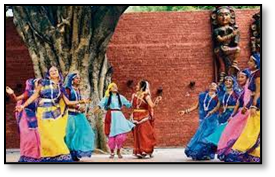
Jat – Jatin:-
Jat-Jatin dance is presented as a couple dance. The basic theme of this dance is the love story of Jat and Jatin.
Chhatishgarh
Panthi dance, Raut dance, Sua dance, Karma dance, Chandeni dance, Pandavani dance.
Pandavani dance:-
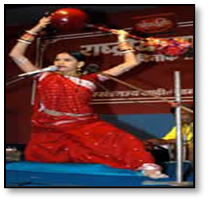
Pandwani dance is a solo drama of Chhattisgarh. Pandavani means Pandavavani – i.e. Pandava story, the story of Mahabharata. Pandwani is a folk ballad mainly performed in Chhattisgarh.
panthi dance:-
Panthi dance is the main dance of the Satnami community settled in the state of Chhattisgarh.
Raut Naach:-
Rautnach is a traditional dance of the Yadav community performed on Diwali. Couplets are sung in the dance.
Goa
Fugandi, Deknni dance, Dhangari Gaja dance, Gauff dance, Koredinho, Kunbi
Dhangari Gaja Dance:-
Dhangari Gaja dance is one of the famous folk dances of Maharashtra and Goa. This dance is performed by the people of Gadaria caste of Solapur district, who are called ‘Dhangar’.
Phugdi dance:-
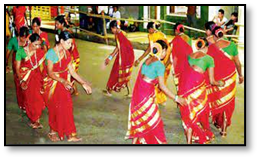
Phugdi dance is the most popular dance, performed by women during religious festivals.
Gujrat
Garba, Dandiya, Tippani, Rasleela, Panihari, Bhavai.
Garba:-
Garba is a popular folk dance of Gujarat and is performed in all parts of India. During the time of Navratri, this dance is performed throughout the nine nights.
Dandiya:-
Dandiya dance is known as stick dance among the popular dances. The sticks used in this dance are considered to be the sword of Goddess Durga.
Bhavai dance:-
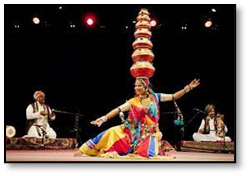
Bhavai dance is considered a dance of emotions. In this dance the dancers balance 7 to 9 brass pitchers on their heads. It is most famous in Rajasthan and Gujarat.
Haryana
Jhumar dance, Phag dance, Duff dance, Dhamaal dance, Khoriya dance, Gugga dance, Lur dance, Chhathi dance, Sang dance.
Phag dance:-
Presented by the farmer in the month of Phalgun.
Gugga dance:-
The devotees of Saint Gugga named this dance Gugga. This traditional folk dance of Haryana, called Gugga dance, is performed mainly by men. It is performed in a procession taken out in the memory of Saint Gugga.
Himachal Pradesh
Nati, Thoda, Dangi, Kadathi, Chham, Budah, Kayang, Raksha dance.
Nati dance:-
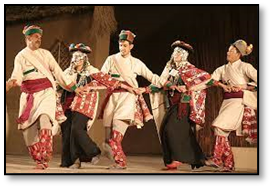
Nati dance is the most famous folk dance of this state. It is performed by a group of people accompanied by musicians. The dance group includes both men and women, which is usually led by a man holding a chanwar.
Jharkhand
Jhumra dance, Chau dance, Paika dance, Domkach dance, Karam dance, Hanta dance, Fagua dance
paika dance:-
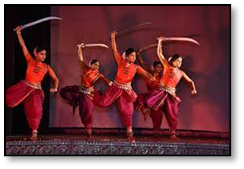
Paika dance involves a high level of martial arts. The dancers hold a sword in one hand and a shield in the other.
chhau dance:-
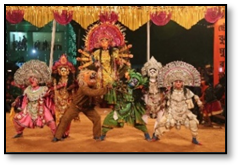
Chhau dance, the traditional folk dance of Jharkhand, is famous for its powerful moves and distinctive masks. This dance style is mainly performed in the open field at night.
Karnataka – Yakshagana, Dolu Kunitha dance, Veergase, Bilalata, Krishna Parijat Nagmandala, Judu Hailey.
Yakshagana dance:-
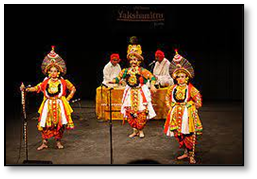
Yakshagana is a folk theater form of Karnataka, an ancient art form related to several traditions of Sanskrit theater or drama.
Krishna Parijat:- Krishna Parijat is a popular folk religious theater form in Karnataka.
Veergase Dance:- Veergase dance is performed on Dussehra festival. It is extremely popular during the months of Shravan and Kartik.
Kerla – Kakarsi Kali, Dappu Kali, Sarpam Kutal, Kavadiyoham, Vela Kali, Thampi Thullal, Kaduva, Margamkali Kumati.
Dappu Kali:- The instrument ‘Dappu’ is used in Dappu dance. It is a group dance of the Moplahs of Malabar.
Lakshadweep – Kolkali, Lava, Parichkali.
lava dance:-
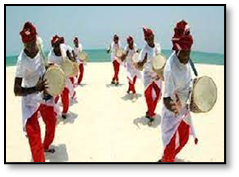
Lava dance is a dance performed mainly by men of Lakshadweep. This word reflects feelings according to music and rhythm.
Madhya Pradesh – Jawara, Matki, Saila, Lehangi, Kangra dance, Muria dance, Bardi dance, Ahiri dance, Phulpati dance.
Matki dance:- ‘Matki’ dance is performed by women on various occasions. This is a community dance of ‘Malwa’.
Maharashtra – Lavani, Kola, Dindi, Koli, Tamasha, Dhangari Gaja, Laijim, Powada, Nakata, Gafa.
Lavani Dance:-
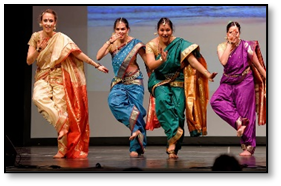
Lavani is a mixture of traditional dance and song, which is mainly performed to the beats of ‘Dholak’. This folk dance is performed by beautiful women wearing a 9 yard saree called Nau Gaj Saree.
Powada dance:- This dance depicts the life of Chhatrapati Shivaji.
Manipur – Lai Haroba, Pung Cholom, Khamba Thabi, Nupa dance, Rasleela, Jagoi, Thagantam, Dol Cholam, Mark dance.
Pung Cholom:- Pung Cholom is an art form combining sound and movement. In this the dancers themselves play the Mridanga (Pung).
Meghalaya – Doregata dance, Laho, Nogkrem, Behdinkhalam, Wangala, Shadsuk.
laho dance:- Both men and women participate in Laho dance. Women usually wear gold and silver jewelery along with colorful attire.
nong krem dance:- Nong Krem dance is performed by the Khasi tribe. It is a part of the five-day long Nogkrem dance festival.
Wangla dance:- Waganla dance is also known as the Festival of 100 Drums. It is celebrated in the honor of Sun God.
Mizoram – Cheraw dance, Khualam dance, Chheh Lam dance, Sawaliya dance, Chailam, Telagam dance, Par Lam, Saralamkai dance.
Cherava dance:-
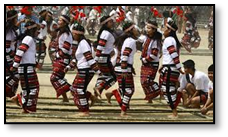
– Chairao dance is also known as ‘Bamboo Dance’ because bamboo is used while performing it.
Nagalaad – Chang Lo, Modas, Regma, Peacock dance, Moynasho, Zeliang dance, Kuki dance, Leshalut, Khamba Lim, Titli dance, Agrisukula.
Important Facts:-
– Zeliang dance is performed by the Zeliang Naga tribe.
– Chang Lo is presented by the Chag tribe.
Odhisha – Ghumura dance, Pala, Daskathio, Dalkhai dance, Chhau dance, Bagha dance, Karma dance, Dhap dance, Goti pua, Dandari, Munari.
ghumura dance:- Ghumura dance is first celebrated as a court dance in Kalahandi state. According to ancient mythological texts it is the war dance of gods and demons.
Pala dance:- This dance is associated with the Satyapir sect. People of Odisha strongly believe in Pala.
Uttar Pradesh – Raasleela, Nautanki, Charkula dance, Pai Danda, Rai, Khayal, Dhobia Raga, Karma.
charkula dance:-
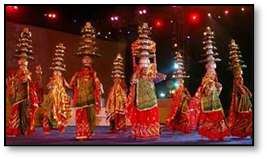
– It is a traditional folk dance of Uttar Pradesh, widely performed in the Braj region of the state. In this performance, veiled women balance a large multi-tiered circular wooden pyramid on their heads while dancing on various steps.
Uttrakhand – Chaunphala, Thadiya, Tandi, Jhumailo, Chholiya, Chhapeli, Pandav dance.
Chholiya dance:- Chholiya is the most famous folk dance of Kumaon, Uttarakhand. In this genre, Chholiya dancers dance in groups.
West Bengal – Kadhi, Gambhira, Brita dance, Jatra bowl, Marasia, Kirtan, Chhau, Santhal, Lathi
Gambhira dance:- Gambhira dance is one of the famous devotional folk dances of Bengal.
Jammu & Kashmir – Hikat, Mandjal, Kud Dandi dance, Damali, Rauf, Damhal.
Rauf dance:- Rauf is a folk dance mainly performed by women of Kashmir Valley. Which is organized by women in the spring season.
Kud dance:- One of the most popular folk dances of Kashmir and it is performed during the rainy season.
Ladakh – Shondol, Shawn, Cham dance, Cham dance, Jabaro dance.
Shondol dance:- This is a famous dance which is performed by the artists for the King of Ladakh.
Daman & Diu – Mando, Vardi Gao, Veera
Puducheri – Garadi
Punjab – Bhangra, Jhoomar, Giddha, Dhumal, Duff, Dhaman, Nakula, Luddi, Julie, Dhankara, Sammi, Kikli, Jaago, Teejan, Baga.
Other important facts:- Bhangra dance is presented during Baisakhi. Jhumar dance is performed by men. It is a slow and rhythmic dance. Juli is a religious dance, associated with pir and singing. Dhankara dance is also called Gatka dance.
Rajasthan – Panihari, Kalbeliya, Ghoomar, Terhtali, Chari, Kathputli, Bhavai.
Kalbelia dance:-
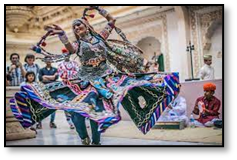
– Kalbelia dance is performed by the Kalbelia tribe in Rajasthan.
– It was included in the list of Intangible Cultural Heritage (ICH) of the United Nations Educational, Scientific and Cultural Organization (UNESCO) in the year 2010.
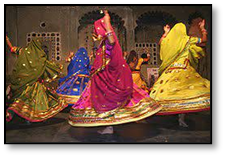
Ghumar dance:- Ghoomar is a popular folk dance of Rajasthan that showcases the rich culture and heritage of Rajasthan and is said to be a symbol of womanhood for the tribes of Rajasthan.
Sikkim – Chu Phat, Maroon dance, Sikamari, Sherpa dance, Yak Plam, Denzong Neh-Na, Ghantu dance.
Important Facts – Chu Phat dance is an ancient dance of the Lepcha community of Sikkim, performed in honor of Kangchenjunga and its four subsidiary peaks.
– Sherpa dance of Sikkim is a unique dance style.
– Ghantu dance is a Sikkimese folk dance patronized by the Gurung community of the state.
Tamilnadu – Kummi, Koulattam, Kavadi Attam, Kai Silabatam, Mayil Attam, Oyilattam, Devarattam, Poikkal Kudirai Attam.
Important Facts – Kai Silambattam folk dance is performed in temples during the Amman festival or Navaratri festival.
Oyilattam folk dance is performed by men to narrate mythological stories of Lord Subramanya and his wife Valli.
Telangana – Perini Shivantandavam, Gusadi, Dhimsa, Lambadi dance, Dappu.
Perini Sivantandavam:-
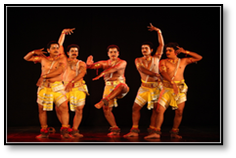
– It is also called Perini Thandavam dance. This dance style is associated with Lord Shiva. It is usually done by men. It is also called ‘dance of warriors’.
Tripura – Hojagiri, Garia, Bizu dance, Lebang Bumani dance.
Important Facts:- Garia dance is an essential part of ‘Garia Puja’. The sacred deity is worshiped through singing and dancing.
– Hojgiri dance is the main dance performed by women on the occasion of Hojgiri festivals.
- Speedy Current Affairs November 2025 Pdf Free Download
- Africa Continent, Major Countries, Straits and Lakes
- Asia continent, Major countries, Jalasandhi and Lakes
- Vision Ias Today Current Affairs 10 May 2025
- Vision Ias Today Current Affairs 8 May 2025
Note : If you are preparing for UPSC, SSC or any other exam then definitely join us.
2 thoughts on “Dance Forms of india List | भारत के प्रमुख नृत्य ”