This is Part 2 for the prominent place of India included in the UNESCO World Heritage List, if you want to read Part 1, then we have provided notes before this website, you must read them once. Questions are asked many times in the exam from here, so you should read these notes for all those who are preparing for any competitive exam.
Indian heritage included in the World Heritage List
26. Manas Wildlife Sanctuary
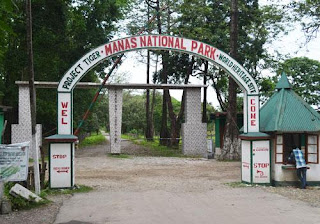
– Manas National Park, full of unique biodiversity and landscape, is located in the Bhutan-Himalaya foothills in the state of Assam.
– It is one of the primary sanctuaries to be included in the network of tiger reserves under Project Tiger in the year 1973.
– In the year 1989 it was declared a Biosphere Reserve and was given the status of National Park in the year 1990.
– It was declared a World Heritage Site by UNESCO in the year 1985.
27. Kaziranga National Park -:
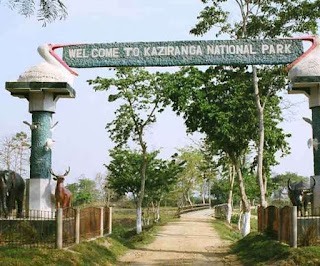
– This national park is famous for the Indian Rhinoceros (one-horned rhinoceros).
– Two-thirds of the world’s one-horned rhinoceros are found in Kaziranga National Park.
– Most of the conservation efforts in Kaziranga focus on the ‘big four’ species – rhino, elephant, Royal Bengal tiger and Asian water buffalo.
– Kaziranga National Park has the third highest population of striped cats in India after Jim Corbett National Park in Uttarakhand and Bandipur National Park in Karnataka.
– It was declared a tiger reserve in 2006.
– In the year 1985, Kaziranga National Forest was included as a UNESCO World Heritage Site.
28. Group of monuments of Mahabalipuram -:
– The group of monuments at Mahabalipuram is located in Kanchipuram, Tamil Nadu.

– Mamallapuram which is also called Mahabalipuram or Sapta Pagodas, is a town which is 60 km from Chennai. Located in the far south on the Coromandel Coast of the Bay of Bengal.
– The religious centers of the city were founded by the 7th century Hindu Pallava king Narasimhavarman, also known as Mamalla, after whom the city was named.
– There are 7th-8th century Pallava temples and monuments including sculptures, a series of cave temples and a Shiva temple on the beach.
– The monuments of the city include five chariots, monolithic temples, remains of seven temples, hence the city was known as Sapta Pagodas.
– These monuments were built by the Pallava kings during the 7th century.
– UNESCO declared it a World Heritage Site in the year 1984.
29. Great Chola Temple -:

– The great Chola temples were built by the kings of the Chola dynasty during the 11th and 12th centuries.
– These temples are located in Tamil Nadu, South India.
– UNESCO declared it a World Heritage Site in the year 1987.
– UNESCO first included Brihadishwar Temple in the list of World Heritage Sites in 1987. Then later, Gangaikonda Cholapuram Temple and Airavatesvara Temple were included as World Heritage Sites by UNESCO in 2004.
30. Sun Temple Konark -:
– Konark Sun Temple is located near the holy city of Puri in eastern Odisha.
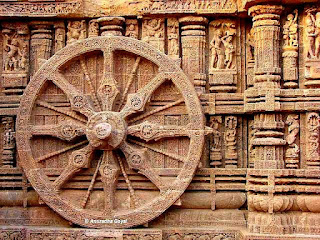
– It was built by King Narasimhadev I in the 13th century (1238-1264 AD). It represents the grandeur, architecture, strength and stability of the Ganga dynasty as well as the historical setting.
– The temple is built in the shape of a huge chariot. It is dedicated to Sun God. In this sense it is directly linked to Brahmanism and Tantric belief systems.
– It is the highest point of achievement of Kalinga architecture which reflects grace, happiness and rhythm of life.
– Seven horses are considered a symbol of the seven days of the week.
– Seafarers once called it the ‘Black Pagoda’ because it was believed to attract ships to the shore and destroy them.
– UNESCO declared it a World Heritage Site in the year 1984.
31. Churches of Goa -:
– They were built during the Portuguese rule in the Indian state of Goa.

– A wide range of churches and cathedrals were built in Old Goa between the 6th and 17th centuries, including the Basilica of Bom Jesus, St. John’s Cathedral, the Church and Hermitage of St. Francis Assisi, the Church of Lady of the Rosary, the Church of St. . Augustine and St. Catherine’s Chapel.
– It was declared a World Heritage Site by UNESCO in the year 1986.
32. Sunderbans National Park -:
– Sunderbans National Park is located in the Indian state of West Bengal.

– Sundarban gets its name from the Sundari tree found here.
– Its core area was declared a Tiger Reserve in the year 1973, a Wildlife Sanctuary in the year 1977 and a National Park on May 4, 1984.
– This park is spread over an area of approximately 1,355 square kilometers.
– The world’s largest halophytic mangrove forest area is located here.
– There are about 2,487 species of animals here.
– The famous Royal Bengal Tiger found in this area is adapted to the aquatic conditions here. This Royal Bengal Tiger can also swim.
– UNESCO declared it a World Heritage Site in the year 1987.
33. Nanda Devi National Park and Valley of Flowers -:

– It is situated on the hill of Nanda Devi in the state of Uttarakhand, India.
– Nanda Devi and Valley of Flowers National Park is located in the high-altitude western Himalayan region.
– Nanda Devi National Park covers the 7,817 meter peak area of Nanda Devi, India’s second highest mountain.
– Alpine flowers and beautiful meadows are found in the Valley of Flowers National Park area.
– In the year 1988, UNESCO included Nanda Devi National Park as a World Heritage Site. And Valley of Flowers was included in the list of World Heritage Sites in 2005.
34. Hill Railways of India -:
– UNESCO included three major mountain railways of India as World Heritage Sites.
– These three major railways are – Darjeeling Himalayan Railway, Kalka – Shimla Railway and Nilgiri Mountain Railway.
(1) Darjeeling Himalayan Railway -:

– This railway was started by the British government
– Darjeeling is located in the state of West Bengal, India and this railway operates between Siliguri and Darjeeling.
– Darjeeling Himalayan Railway is also known as “Toy Train”.
– It was included in the list of World Heritage Sites in 1999.
(2) Nilgiri Mountain Railway -:

– It is a single track railway Which is situated on the Nilgiri hills of Tamil Nadu.
– It was included in the list of World Heritage Sites by UNESCO in 2005.
(3) Kalka Shimla Railway -:
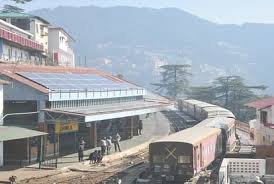
– This mountain railway located in Himachal Pradesh was started in 1903.
– This railway runs between Kalka and Shimla.
– It was included in the list of World Heritage Sites by UNESCO in 2008.
35. Western Ghats -:
– The Western Ghats are also known as Sahyadri.
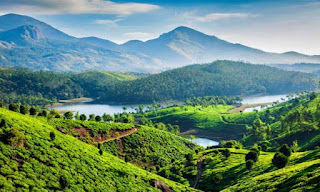
– The Western Ghats range extends from Gujarat to Maharashtra, Goa, Karnataka to Tamil Nadu and Kerala.
– UNESCO declared this site as a World Heritage Site in 2012.
36. Great Himalayan National Park -:
– It is located in Kullu district of Himachal Pradesh state in India.

– The Great Himalayan National park was declared a national park in the year 1999.
– This park is protected under the Wildlife Protection Act, 1972.
– UNESCO declared it a World Heritage Site in the year 2014.
37. Kanchenjunga National Park -:

– Kangchenjunga National Park is a national park and biosphere reserve located in Sikkim.
– The park takes its name from Mount Kangchenjunga, which is 8,586 meters tall (the third highest peak in the world). The total area of this park is 849.5 square km.
– It was included in the list of UNESCO World Heritage Sites in July 2016, being India’s first and only ‘Mixed Heritage’ site.
38. Architectural work of Le Corbusier (Capitol Complex)
– The originator of this architecture was a famous Swiss-French architect Le Corbusier.

– This architectural heritage includes 17 sites spread across 7 countries, in which the expression of modern architectural style can be seen
– This architecture introduced apartments and modular design in buildings to provide better residential facilities to people in crowded cities.
– Apart from the complex, Le Corbusier has also designed the Government Museum and Art Gallery, Chandigarh Architecture College in Chandigarh.
– UNESCO included the architectural work of Le Corbusier located in Chandigarh in the list of World Heritage Sites in 2016.
39. Rudreshwara Temple (Ramappa Temple)
– Rudreshwara Temple (also known as Ramappa Temple), located in Mulugu district of Telangana, has been included in the UNESCO World Heritage Site list.
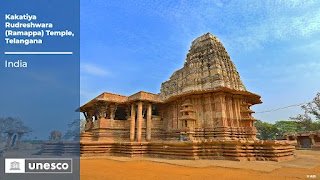
– The Rudreshwar temple was built by Recharla Rudra, a general of the Kakatiya king Ganapati Dev, during the reign of the Kakatiya Empire in 1213 AD.
– The established deity here is Ramalingeshwara Swami.
– It is also known as Ramappa Temple, after the name of a sculptor who built the temple for 40 years.
– The temple stands on a six-foot high star-like platform, with intricate carvings on the walls, pillars and ceilings, attesting to the peerless skill of the Kakatiya sculptors.
– Its foundation is made with “sandbox technology”, in which the floor is made of granite stones and the pillars are made of basalt rocks.
– The lower portion of the temple is made of red sandstone while the white gopuram is made of lightweight bricks that can reportedly float on water.
– According to an inscription, the date of construction of the temple is Ashtami of Magha month (January 12, 1214) Shaka Samvat 1135.
– The distinctive style of the Kakatiyas, from temple complexes to gateways, which is unique to the region, attests to the highly developed form of aesthetics in temple and city gateways in South India.
– European traders and travelers were mesmerized by the beauty of the temple and one such traveler noted that the temple was “the brightest star in the galaxy of medieval temples of the Deccan”.
40. Dholavira -:
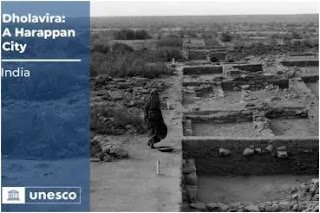
– Dholavira is one of the largest and most prominent archaeological sites of the Harappan civilization in India, located at Khadirbet in Bhachau taluka of Kutch district of Gujarat.
– The Dholavira site was discovered by JP Joshi of the Archaeological Survey of India in 1967–68.
– The site is surrounded by vast salt plains located in the Rann of Kutch and also includes the ruins of the ancient Indus Valley Civilization.
– Here in 3500 BC. People started settling from 1800 BC and then continuously from 1800 BC. The population remained there till.
– Dholavira was counted among the busiest metropolis of the world five thousand years ago.
– It is one of the very few preserved urban settlements in South Asia, dating back to the 3rd to 2nd millennium BC.
41. Shanti Niketan -:
– Shanti Niketan is located in West Bengal.
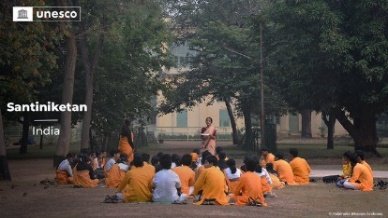
– In the year 1863, Rabindranath Tagore’s father Debendranath Tagore established an ashram named Shantiniketan. In 1901, Rabindranath Tagore converted it into a residential school and art center based on the Gurukul system of ancient India.
– Tagore established Visva Bharati here in 1921, which was declared a Central University and an Institute of National Importance in 1951.
42. Sacred Temple Groups of the Hoysalas -:
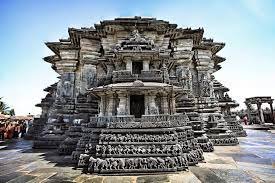
– The Hoysala group of sacred temples is located in Karnataka.
– In the year 2023, the Hoysala Temple Group of Bellur, Halebid and Somnathpura was included in the UNESCO World Heritage Site.
– Hoysala temples were built between the 12th-13th century.
- Speedy Current Affairs November 2025 Pdf Free Download
- Africa Continent, Major Countries, Straits and Lakes
- Asia continent, Major countries, Jalasandhi and Lakes
- Vision Ias Today Current Affairs 10 May 2025
- Vision Ias Today Current Affairs 8 May 2025
UNESCO’s Intangible Cultural Heritage
| Intangible cultural heritages recognized by UNESCO | |||
| 1. | Vedic chanting tradition,2008 | 9. | Sankirtan, ritual, singing, drumming and dancing of Manipur, 2013 |
| 2. | Ramlila, traditional performance of Ramayana, 2008 | 10. | Traditional craft of brass and copper vessel making among the Thathers of Jandiala Guru, Punjab, India, 2014 |
| 3. | Kutiyattam Sanskrit Theatre, 2008 | 11. | Yoga, 2014 |
| 4. | Ramman, Staging of Religious Festivals and Traditions of the Garhwal Himalayas, 2009 | 12. | Navroz, 2016 |
| 5. | Mudiyettu, ritual theater and dance of Kerala, 2010 | 13. | Kumbh Mela,2017 |
| 6. | Kalbeliya Folk Song and Dance of Rajasthan, 2010 | 14. | Durga Puja, 2021 |
| 7. | Chhau dance, 2010 | 15. | Garba,2023 |
| 8. | Buddhist Chanting of Ladakh: Recitation of Sacred Buddhist Texts in the Ladakh Region of the Himalayas, Jammu and Kashmir, India, 2012 | ||
Note : If you are preparing for UPSC, SSC or any other exam then definitely join us.
1 thought on “UNESCO World heritage Part 2”